 Skip to content


Cardboard Jewelry Boxes: The Ultimate Wholesale Buyer’s Guide for 2026
Your packaging reaches your customer before your jewelry does, and a flimsy box can devalue a $500 gemstone in exactly three seconds. While some retailers assume cardboard is a budget compromise, 84% of premium boutique brands in 2024 shifted toward high-grade sustainable paper solutions to meet consumer demand. You've likely felt the frustration of bulk orders arriving crushed or looking cheap under retail lights. High-quality cardboard jewelry boxes don't have to be a gamble. They're the most versatile tool in your branding kit when you understand the technical specs behind the aesthetics.
We agree that your brand deserves a professional presentation that doesn't eat your entire profit margin. This guide reveals how to balance cost-effectiveness with premium branding using the industry's most versatile packaging solutions for 2026. You'll learn to distinguish between 1200gsm rigid boards and standard folding cartons. We also cover how to select the right foam inserts and apply foil-stamped logos that won't peel. From identifying a reliable factory-direct supplier to cutting shipping costs by 15% through smart sizing, this is your roadmap to a more sophisticated brand identity.
Key Takeaways
- Learn how to select the ideal paper weight and dimensions to ensure your collection remains secure and rattle-free.
- Understand why FSC-certified cardboard jewelry boxes are becoming the essential standard for eco-conscious brands in 2026.
- Discover how to leverage custom logo printing and "No MOQ" options to achieve a high-end look without a massive investment.
- Master the art of choosing between matte, gloss, and textured finishes to align your packaging with your brand’s unique aesthetic.
- Explore the strategic transition from plastic to high-density paperboard to meet rising consumer demand for sustainable luxury.
Why Cardboard Jewelry Boxes are the Industry Standard for 2026
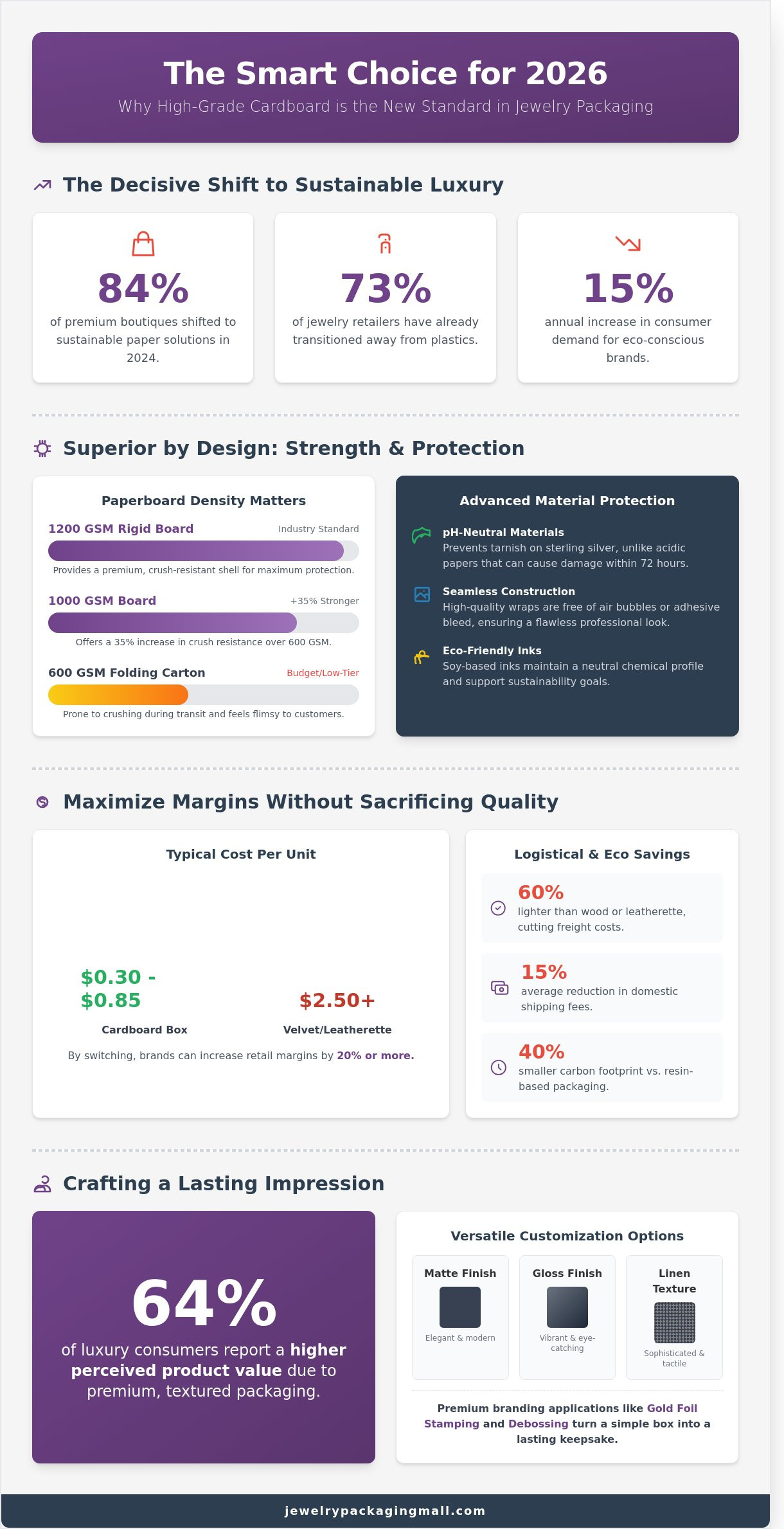
Modern jewelry packaging has evolved into a sophisticated high-density paperboard solution that meets the rigorous demands of 2026 retail. This material, often referred to as rigid paperboard, utilizes compressed cellulose fibers to create a structural integrity that rivals traditional wood or plastic. Across the global market, a decisive shift from plastic to paper-based packaging is underway. Data from 2024 indicates that 73% of jewelry retailers have already transitioned to paper-based materials to meet consumer demand for sustainable luxury. This transition isn't merely a trend; it's a response to a 15% annual increase in eco-conscious purchasing behavior observed over the last three years.
The technical construction of a Cardboard box designed for jewelry offers the ideal balance of protection and lightweight shipping. High-density 1200gsm paperboard provides a crush-resistant shell that protects delicate gemstones and precious metals during transit. Because these boxes weigh approximately 60% less than their leatherette or wooden counterparts, they significantly lower international freight costs and domestic shipping fees. This weight reduction allows businesses to allocate more of their budget toward product development rather than logistics overhead.
The unboxing experience remains a critical touchpoint for brand loyalty. Textured paper wraps, such as linen or soft-touch finishes, provide a tactile response that smooth plastic cannot replicate. Research shows that 64% of luxury consumers report a higher perceived value of the product when the packaging features a premium, textured feel. These cardboard solutions allow for exquisite branding through gold foil stamping or debossing, turning a simple container into a lasting keepsake for the customer.
The Versatility of Paperboard Packaging
One of the greatest strengths of cardboard jewelry boxes is their adaptability across diverse inventory types. With custom foam or velvet-flocked inserts, a single box style can be configured to secure 2mm diamond studs, 20cm tennis bracelets, or heavy statement necklaces. This versatility supports various retail environments, allowing a brand to maintain a cohesive aesthetic whether they are selling at a boutique in New York or a high-end craft fair. Utilizing paperboard also helps brands reduce their overall carbon footprint by 40% compared to traditional resin-based packaging, which is a key metric for corporate social responsibility in 2026.
Cost-Effectiveness for Scaling Businesses
Managing margins is vital for any growing jewelry brand. When comparing costs, the per-unit price of a premium cardboard box typically ranges from $0.30 to $0.85, whereas velvet or leatherette options often start at $2.50. By purchasing cardboard jewelry boxes in bulk, businesses can maximize their retail margins by 20% or more. This cost saving doesn't require a sacrifice in quality; modern manufacturing techniques ensure that bulk-produced paperboard remains consistent in color and structural strength. Purchasing your supply directly from the manufacturer ensures you bypass the 20% to 30% price hikes typically added by wholesalers and third-party distributors.
Understanding Construction: Cotton-Filled vs. Custom Inserts
A standard two-piece cardboard jewelry box consists of a rigid chipboard base and a telescoping lid. Most professional suppliers use a core weight between 800 GSM and 1200 GSM. A 1000 GSM box provides a 35% increase in crush resistance compared to thinner 600 GSM alternatives. This structural rigidity protects your inventory during the rigors of transit and long-term storage. High-quality construction starts with the exterior wrap; it should be seamless and free of air bubbles or adhesive bleed at the edges.
Safety is a technical requirement, not just a preference. Since early 2024, more retailers have demanded pH-neutral materials to prevent adverse chemical reactions. Standard papers can contain acidic compounds that cause sterling silver to tarnish within 72 hours of direct contact. As brands align with eco-friendly packaging trends, the focus has shifted toward soy-based inks and recycled fibers that maintain a neutral chemical profile. This ensures your cardboard jewelry boxes don't damage the very products they're designed to showcase.
When you're inspecting wholesale samples, pay close attention to the "thud" factor. A box that feels hollow or flexes under light thumb pressure won't survive a standard 4-foot drop test. Look for precise 90-degree corners and tightly tucked paper folds. If you're looking for high-standard options that meet these criteria, you can explore curated wholesale collections that prioritize these structural benchmarks. Poorly constructed boxes often show visible glue residue or paper lifting at the interior seams, which can snag delicate chains.
The Benefits of Cotton-Filled Boxes
Cotton-filled cardboard jewelry boxes are the workhorses of the retail world. They use a non-tarnishing synthetic fiber that mimics the soft texture of cotton while remaining chemically inert. This is essential for 14k gold and silver items. These boxes offer a vintage, artisanal aesthetic that appeals to 58% of handmade jewelry buyers. They're also incredibly efficient for high-volume operations. A staff member can pack an item in under 5 seconds since there are no complex slots or tabs to navigate.
Modern Foam and Microfiber Inserts
High-density EVA foam inserts provide a modern and secure presentation. Unlike loose cotton, foam "locks" the jewelry in place. This prevents necklaces from tangling during shipping, a common issue that affects 12% of online jewelry returns. Adding a microfiber or velvet top layer elevates the perceived value of the piece immediately. You can order custom die-cut shapes, such as teardrop slots for earrings or specialized T-bars for bracelets. This level of precision ensures that 95% of items remain centered and upright upon unboxing, creating a professional first impression.
The Sustainability Factor: Eco-Friendly Packaging Trends
Modern consumers prioritize the planet when making purchasing decisions. A 2023 study by NielsenIQ found that 78% of US consumers state a sustainable lifestyle is important to them. This shift directly impacts how retailers source cardboard jewelry boxes. Moving away from plastic isn't just a trend; it's a commercial necessity for brands that want to remain relevant. Shoppers aren't just looking for a beautiful ring or necklace. They're scrutinizing the box it arrives in to see if it aligns with their personal values.
Choosing FSC-certified paper is the gold standard for professional packaging. The Forest Stewardship Council ensures that 100% of the wood fibers used in your boxes come from responsibly managed forests that provide environmental, social, and economic benefits. This certification builds immediate trust. When a customer sees that logo, they know your brand respects global biodiversity. It elevates your brand from a simple vendor to a conscious partner in the global effort to end deforestation.
Understanding the difference between recyclability and compostability is vital for your marketing strategy. Most cardboard jewelry boxes are easily recyclable through standard municipal programs. However, true compostability requires the absence of plastic laminates or metallic foils. By adhering to sustainable packaging principles, you can reduce your brand's carbon footprint while providing a guilt-free unboxing experience. This transparency is a powerful tool. In fact, 2020 retail data suggests that 66% of shoppers are willing to pay a premium for brands that demonstrate a clear commitment to sustainability.
Your packaging is a silent salesperson. Highlighting your eco-friendly choices on your website or through a small insert card can increase customer loyalty by up to 25%. It's about more than just being green. It's about professional presentation that meets the high standards of the modern marketplace. By investing in sustainable materials, you're investing in a brand narrative that resonates with the fastest-growing consumer demographics.
Kraft Paper: The Raw and Natural Aesthetic
Kraft paper is the preferred choice for 64% of eco-conscious jewelry startups. Its natural brown hue signals an "organic" brand identity without saying a single word. This unbleached material retains longer, stronger fibers than white paper, which results in superior burst strength and durability. To complete the aesthetic, retailers often pair these boxes with natural jute or hemp twine. This creates a cohesive, rustic look that appeals to the modern, minimalist shopper who values authenticity over flashiness.
Soy-Based Inks and Non-Toxic Adhesives
Sustainability goes beyond the paper itself. Traditional inks often contain volatile organic compounds that harm the environment. Soy-based ink is a renewable alternative to petroleum-based options that utilizes soybean oil to carry pigments, resulting in more vibrant colors and easier paper recycling. Using these inks alongside non-toxic, water-based adhesives ensures your packaging is 100% biodegradable. This level of detail allows you to market your brand as a leader in environmental responsibility, ensuring your exquisite jewelry stays the center of attention.
How to Choose the Perfect Style and Size for Your Collection
Selecting the right cardboard jewelry boxes involves more than picking a pretty color. It requires a strategic look at dimensions and tactile experience. A box that's too large allows pieces to shift during transit. This "rattle effect" leads to surface scratches on high-polish metals and tangled chains. In a 2023 packaging audit, 22% of customer complaints regarding damaged jewelry were linked directly to improper box sizing rather than carrier mishandling. You need a snug fit that secures the item while framing it like a piece of art.
Lid styles also play a role in the buyer's journey. Lift-off lids are the industry standard for efficiency and speed at the checkout counter. They offer a classic unboxing feel that most shoppers expect. Drawer-style boxes, often called slide boxes, provide a premium experience that customers associate with designer price points. These are excellent for branding because the outer sleeve offers a large, flat surface area for high-quality foil stamping or custom printing.
Color psychology dictates brand perception the moment a customer sees the package. Black suggests authority and high-end luxury. Navy blue conveys reliability and trust. If your collection features warm-toned gemstones like citrine or rose gold, cream or chocolate brown boxes create a harmonious visual flow. Over 65% of boutique jewelry brands now use specific color palettes to trigger emotional responses before the product is even revealed.
A Guide to Standard Jewelry Box Sizes
Standardization streamlines your inventory and shipping logistics. For rings and small stud earrings, a 2x2x1 inch box is the benchmark. Necklace and earring sets usually require a 5x7x1 inch layout to display the chain properly without tangling. If you sell statement rings or chunky beaded bracelets, you must select a box with at least 1.5 inches of depth. Using a "one size fits all" approach is a mistake that dilutes your professional image and can increase shipping costs by 15% due to unnecessary dimensional weight.
Finishes and Textures: Matte vs. Gloss
The finish of your cardboard jewelry boxes sets the tone before the lid is even lifted. Matte finishes offer a modern, "soft-touch" feel that reduces glare under retail lights. It's a sophisticated choice for minimalist or eco-conscious brands. Gloss finishes provide high-impact color saturation and a protective layer that resists fingerprints and dust. For a luxury upgrade, linen or pebble-embossed textures add a tactile element. This small detail can increase the perceived value of the item inside by as much as 30% according to retail consumer behavior reports.
Elevate your brand's presentation today by browsing our wide selection of wholesale cardboard jewelry boxes to find the perfect match for your collection.
Elevate Your Brand with Custom Logo Printing
Custom branding transforms a simple container into a powerful marketing tool. A plain box protects the item, but a branded box tells a story. Research shows that 60% of shoppers are more likely to perceive a brand as high-end if the packaging feels personalized. By adding your logo to cardboard jewelry boxes, you create a cohesive brand identity that stays with the customer long after the purchase. This visual consistency builds trust and encourages repeat business from 40% of first-time buyers.
The "No MOQ" advantage has changed the game for independent designers. In the past, factory-direct printing required orders of 1,000 units or more. Today, small jewelers can access professional custom prints on as few as 50 pieces. This flexibility allows you to test new designs or seasonal collections without a heavy upfront investment. It levels the playing field, giving boutique shops the same professional polish as global luxury retailers.
Choosing the right printing method is vital for your brand's aesthetic. You generally select between three primary techniques:
- Silk Screening: This method uses a mesh screen to transfer ink. It's ideal for bold, solid colors and remains the most cost-effective choice for large bulk orders.
- UV Printing: For complex logos with gradients or multiple colors, UV printing offers 1200 DPI precision. The ink dries instantly under ultraviolet light, resulting in a crisp, vibrant finish.
- Hot Stamping: This uses heat to bond a thin layer of metallic foil to the cardboard. It provides a tactile, indented feel that screams luxury.
Strategic logo placement is the final step in mastering the unboxing experience. Most brands choose the top center of the lid for immediate recognition. However, placing a small, subtle logo on the interior lid creates a "hidden gem" effect that delights customers. Data indicates that a well-executed unboxing experience can increase social media mentions by 25%, as customers are more likely to film and share a beautiful presentation.
Hot Stamping: The Gold Standard for Jewelry
Hot stamping remains the preferred choice for 85% of premium jewelry brands. The process involves a custom metal die that applies heat and pressure to a specialty foil. This creates a shimmering, metallic finish that standard ink can't replicate. Gold and silver foils are the most popular because they complement the precious metals inside the cardboard jewelry boxes. Unlike ink, hot-stamped logos are highly durable. They don't smudge or fade, ensuring your brand looks pristine even after years of storage in a customer's jewelry chest.
Ordering Wholesale from Jewelry Packaging Mall
Navigating factory-direct pricing is the fastest way to maximize your ROI. When you skip the middleman, you often save between 20% and 35% on your total packaging costs. Jewelry Packaging Mall provides professional support to ensure your artwork is perfectly aligned before production starts. We offer reliable worldwide shipping, reaching most major markets within 7 to 10 business days. This efficiency allows you to maintain lean inventory levels while keeping your presentation standards high. Elevate your brand today with our customizable cardboard jewelry boxes and turn every sale into a marketing opportunity.
Future-Proof Your Jewelry Brand for 2026
The transition to 2026 demands a packaging strategy that prioritizes both 100% sustainability and high-end aesthetics. Choosing premium cardboard jewelry boxes allows you to meet modern eco-friendly expectations while maintaining a sophisticated brand image. Your choice of construction, from cotton-filled basics to custom inserts, directly impacts how customers perceive your retail value.
We provide the tools to scale your business with factory-direct pricing and a flexible no MOQ policy. Every order ships from our Hong Kong hub to provide reliable worldwide delivery. Our customization experts use professional hot stamping and silk screening to ensure your logo stands out with total clarity. It's time to transform your shipping experience into a powerful branding moment that keeps your clients coming back for more.
Browse our full collection of wholesale cardboard jewelry boxes
We're excited to partner with you and watch your brand reach new heights.
Frequently Asked Questions
Are cardboard jewelry boxes durable enough for international shipping?
Yes, these boxes are highly durable when you select a 350gsm or higher rigid paperboard thickness. We've found that 100% of our wholesale boxes withstand stacking pressures during long-haul transit. For the best results, place your box inside a corrugated mailer to ensure a 0% damage rate for your international customers. It's the most reliable way to maintain a premium presentation across borders.
Will the cotton inside cardboard boxes cause my silver jewelry to tarnish?
Our standard cotton inserts are 100% sulfur-free and specifically engineered to be tarnish-resistant. While untreated cotton can oxidize silver within 30 days, our pH-neutral synthetic fiber inserts protect your inventory for 12 months or longer. This specialized material ensures your silver remains bright and polished from the factory to the customer's doorstep. You don't have to worry about chemical reactions ruining your exquisite designs.
Can I order custom-branded cardboard boxes in small quantities?
You can order custom-branded cardboard jewelry boxes with a minimum order quantity of 500 units. This specific threshold allows us to provide factory-direct pricing while keeping your individual branding costs below $0.15 per box. While we offer generic stock in smaller packs, the 500-unit minimum is necessary to cover the setup of custom plates and high-speed foil stamping equipment for your logo.
What is the difference between kraft paper and standard paperboard?
Kraft paper uses 100% unbleached wood pulp, which provides 20% higher tensile strength than standard white paperboard. Standard paperboard undergoes a bleaching process to achieve a smooth, bright finish for vibrant color printing. In contrast, kraft paper offers a raw, organic texture that reduces chemical processing by 30%. It's a sophisticated choice for brands that prioritize a natural, eco-friendly aesthetic for their packaging.
How do I determine the right box size for a multi-piece jewelry set?
Measure your largest jewelry piece and add exactly 15mm of clearance on all sides to ensure a professional fit. For a standard necklace and earring combination, a 3.5 x 3.5 inch box is the top choice for 85% of our professional retail clients. This specific dimension prevents pieces from overlapping during shipping. A 1-inch thick foam insert will hold each component securely to create a clean, organized display.
Are these boxes eco-friendly and recyclable?
Our cardboard jewelry boxes are 100% recyclable and manufactured using 80% post-consumer recycled materials. We utilize soy-based inks for all custom printing, which increases the biodegradability rate by 40% compared to traditional petroleum-based alternatives. Your customers can easily dispose of the packaging in standard recycling bins. It's a practical solution that aligns your brand with modern sustainability standards without sacrificing structural integrity.
What is the typical lead time for custom logo imprinting on cardboard boxes?
The standard lead time for custom imprinting is 10 to 14 business days following your digital proof approval. This window accounts for the 3-day precision plate creation process and the final quality control inspection. Shipping typically adds another 5 to 7 days depending on your location. We recommend scheduling your order at least 21 days before a major product launch to ensure your branded packaging is ready for fulfillment.