 Skip to content


The Ultimate Guide to Satin Drawstring Pouches for Jewelry Branding in 2026
What if your packaging could reduce your storage footprint by 85% while making your jewelry look twice as expensive? Many boutique owners struggle to find a balance between luxury aesthetics and the practical reality of limited warehouse space. You already know that first impressions are everything. Yet, bulky boxes often lead to high shipping costs and cluttered shelves that eat into your margins.
It's a common challenge to find packaging that feels premium but doesn't require a massive upfront investment. This guide shows you how to leverage the versatility of a satin drawstring pouch to elevate your brand's presentation and create a memorable unboxing experience. According to a 2023 Dotcom Distribution study, 61% of online shoppers say that premium packaging makes a brand seem more upscale. We'll explore how to achieve this sophisticated look using customizable options with low MOQs. You'll discover the specific 2026 design trends and logistics strategies that protect your pieces from scratches while significantly boosting your brand's perceived value.
Key Takeaways
- Understand why a high-quality satin drawstring pouch is essential for protecting delicate jewelry while providing a premium, lustrous finish that enhances brand value.
- Learn the technical differences between silk and polyester weaves and how to select the ideal GSM to ensure a luxurious hand-feel and long-term durability.
- Compare satin against microfiber and velvet to determine which material best aligns with your brand's specific aesthetic and protective requirements.
- Master the art of custom packaging by selecting the perfect dimensions and color palettes to create a memorable, cohesive unboxing experience.
- Discover how to access factory-direct pricing and low minimum order quantities to scale your brand's professional presentation without the middleman markup.
What is a Satin Drawstring Pouch and Why is it a Jewelry Industry Staple?
A satin drawstring pouch is a soft, lustrous textile container featuring a dual-cord closure system. These pouches provide a protective barrier against scratches and environmental factors while maintaining a high-end aesthetic. As we look toward 2026, the shift from rigid, plastic-based boxes to flexible packaging has accelerated. Retailers now prioritize efficiency and sustainability, making the satin pouch a fundamental element of modern jewelry packaging strategies.
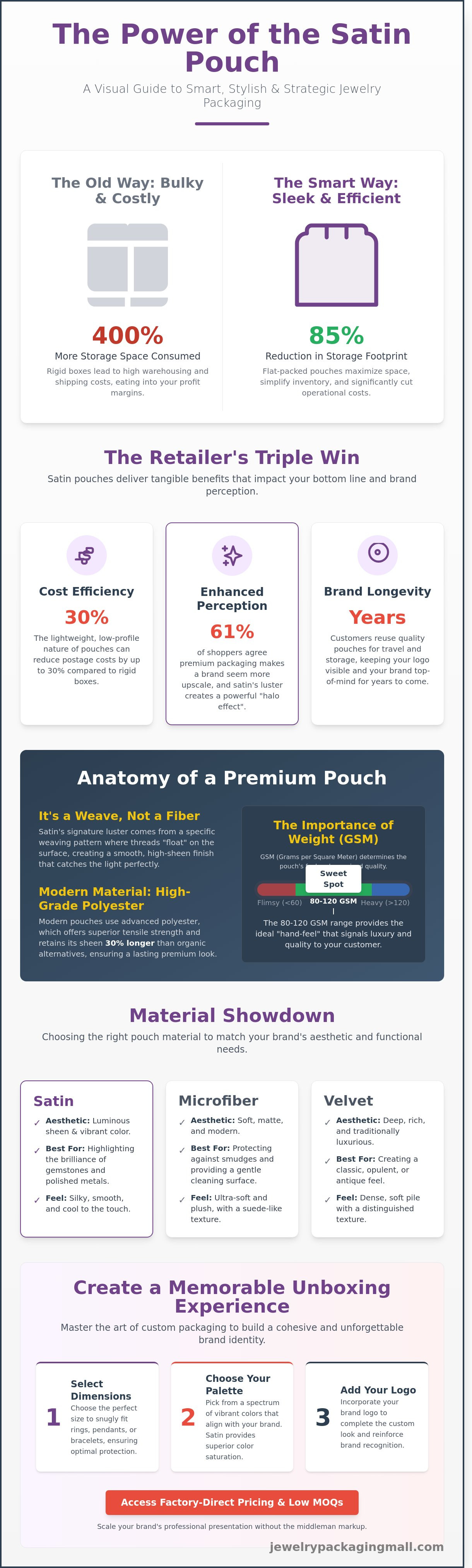
The industry's move toward flexible solutions isn't accidental. Rigid boxes often consume 400% more storage space than flat-packed pouches. In a landscape where warehouse costs and shipping fees continue to rise, the ability to store thousands of units in a single drawer is a significant logistical advantage. Brands are choosing these pouches because they offer a premium feel without the bulk of traditional containers.
The Aesthetic Appeal of Satin Luster
The visual impact of a satin drawstring pouch begins with its unique weave. Unlike flat-weave textiles, satin fabric is characterized by a technique that leaves more of the warp or weft threads on the surface. This creates a high-sheen finish that catches the light, perfectly complementing the brilliance of gemstones and polished metals. This luster creates a psychological "halo effect," where the customer perceives the item inside as more valuable due to the quality of the exterior wrap.
Texture plays a vital role in the unboxing experience. The smooth, silky feel of satin provides a tactile sensation that cotton or linen cannot replicate. Additionally, satin holds dye with exceptional clarity. This allows for deep, vibrant brand colors that remain consistent across large wholesale orders. Whether it's a classic midnight blue or a trendy 2026 pastel, the color saturation on satin remains superior to most natural fiber alternatives.
Functional Advantages for Retailers
For jewelry business owners, the benefits of the satin drawstring pouch extend far beyond looks. These pouches are a powerful tool for cost control and brand longevity. Consider these specific advantages:
- Reduced Shipping Costs: Pouches are lightweight and low-profile. They allow for smaller shipping mailers, which can reduce postage costs by up to 30% compared to shipping rigid boxes.
- Inventory Versatility: A single medium-sized pouch can accommodate rings, stud earrings, or delicate pendants. This flexibility reduces the need to stock multiple box sizes, simplifying your supply chain.
By choosing these flexible containers, retailers solve the dual challenge of protecting delicate inventory while maximizing their marketing reach. The 2026 market demands packaging that is both beautiful and business-smart, making the satin pouch an essential choice for any growing jewelry brand.
Material Science: Understanding Satin Grades and Durability
Satin isn't a raw material; it's a specific weave pattern where four or more weft yarns float over a single warp yarn. This technical structure creates the signature glossy surface and dull back that defines a premium satin drawstring pouch. While silk was the traditional fiber, modern jewelry packaging almost exclusively uses high-grade polyester because of its superior tensile strength and color retention. A 2024 textile industry report indicates that polyester-based satins retain their sheen 30% longer than organic alternatives when subjected to retail handling.
The quality of your packaging is measured in GSM (Grams per Square Meter). For jewelry, a GSM between 80 and 120 is the sweet spot. Fabrics below 60 GSM often feel flimsy and transparent, which can diminish the perceived value of the piece inside. This tactile feedback is vital because the psychology of packaging suggests that customers equate the weight and texture of a container with the quality of the product. Heavyweight satin provides a "hand-feel" that signals luxury before the customer even sees the jewelry.
Durability also extends to chemical protection. High-quality satin linings serve as a physical barrier against moisture and atmospheric sulfur. Some advanced satin pouches are now manufactured with anti-tarnish properties, using treated fibers that neutralize gases responsible for silver oxidation. This ensures that gold-plated and sterling silver items remain showroom-ready during long-term storage.
Polyester vs. Silk Satin for B2B
High-grade polyester satin is the 2026 industry standard for wholesale jewelry packaging. It offers exceptional wrinkle resistance and a high-shine finish that doesn't dull over time. Unlike silk, which is prone to snagging and water spots, polyester is rugged enough for global shipping. Sustainability is also shifting the market. By 2026, an estimated 40% of luxury retailers will transition to rPET (recycled polyester) satin, which provides the same exquisite sheen while meeting corporate ESG goals.
Drawstring Mechanics and Cord Quality
The closure is the most frequent point of failure in a satin drawstring pouch. To prevent fraying, look for heat-sealed nylon or braided satin ribbons rather than simple cotton cords. We recommend double-drawstring designs for B2B logistics. This configuration provides a balanced tension that prevents "pouch creep," a common issue where the bag slowly opens during transit. A secure double-pull closure ensures the jewelry stays encased regardless of movement. You can explore these high-performance designs at Jewelry Packaging Mall to find the right fit for your inventory.
Satin vs. Microfiber vs. Velvet: Choosing the Right Pouch
Choosing a pouch material isn't just about aesthetics; it's a strategic business decision that impacts your bottom line and customer retention. A satin drawstring pouch signals a sleek, feminine elegance that resonates with luxury bridal shoppers who prioritize tactile packaging. Microfiber offers a high-tech, modern feel, while velvet remains the gold standard for traditional heritage brands. Each material serves a specific functional purpose. High-polish metals like 18k gold require the non-abrasive surface of satin to prevent micro-scratches. Heavier pieces or delicate chains often benefit from the structural padding of velvet, which reduces movement during transit.
High-volume retailers must weigh the cost-benefit of these materials. While velvet offers a premium weight, it often increases shipping costs due to its bulk. Satin provides a comparable luxury feel with a much slimmer profile. Many brands now mix and match materials across collections. For example, use velvet for high-ticket engagement rings and a satin drawstring pouch for everyday minimalist earrings to balance packaging expenses without compromising brand integrity.
The Case for Satin’s Versatility
Satin dominates the bridal and high-fashion sectors because its light-reflective surface complements gemstones beautifully. While you might consider custom microfiber jewelry pouches bulk for their built-in cleaning properties, satin offers a more fluid drape that feels expensive in a customer's hand. Velvet is often too dense for minimalist jewelry boxes, but satin fits into tight spaces without adding unnecessary weight. This helps retailers manage logistics, especially when moving 5,000 or more units per quarter. If your brand personality is about grace and luster, satin is the clear winner over the utilitarian look of microfiber or the heavy, sometimes dated feel of velvet.
Material Selection Framework
Selecting the right material requires a logical approach based on your specific inventory and retail environment. Packaging is the first physical touchpoint for e-commerce customers. Investing in quality materials allows brands to create engaging unboxing experiences that effectively replace the traditional in-store shelf presence. Use this checklist to guide your 2026 procurement:
- Budget Tiers: Satin offers the best ROI for high-volume retail, providing a luxury look at a competitive price point.
- Protection Needs: Choose velvet for heavy statement necklaces to prevent tangling; use satin for polished surfaces to avoid lint transfer.
- Climate Control: In high-humidity regions, microfiber's moisture-wicking properties can help slow down the oxidation process for sterling silver.
- Display Consistency: Match the pouch sheen to your existing retail fixtures. Satin pairs well with acrylic displays, while velvet suits traditional wood and glass cases.
By aligning your material choice with your brand's price point and protection requirements, you ensure the packaging works as hard as the jewelry inside. Whether it's the modern utility of microfiber or the classic shine of satin, your choice defines the customer's perception of value before they even see the product.
Designing Your Custom Satin Pouch: Size, Color, and Logo
Designing a custom satin drawstring pouch is a strategic decision that bridges the gap between product protection and brand storytelling. Color psychology plays a vital role in this process. For instance, navy blue often conveys trust and authority in the jewelry market, while champagne gold suggests high-end exclusivity. Your palette should reinforce your brand's core identity and appeal to your specific demographic. To ensure a seamless transition from the point of sale to the customer's home, many successful retailers integrate these pouches with a paper shopping bag with ribbon handle. This creates a cohesive, multi-layered presentation that elevates the perceived value of the purchase; for those looking to expand into luxury leather accessories, you can discover Adnan Lederwaren to find products that match this high level of sophistication.
Logo Printing Techniques for Satin
Selecting the right application method ensures your logo remains crisp on the slippery, reflective surface of the fabric. Different techniques offer varied aesthetic results:
- Hot Stamping: This is the gold standard for luxury branding. It uses heat to bond metallic foil to the satin, creating a reflective, high-contrast finish that catches the light beautifully.
- Silk Screening: This method is best for matte finishes or intricate designs with specific Pantone requirements. It provides excellent durability and color saturation for complex logos.
- Embroidery: Use this for a tactile, high-end effect. While it requires a higher thread count, the physical weight and texture of embroidery associate your brand with artisan quality and longevity.
Optimizing Pouch Dimensions
Selecting the correct satin drawstring pouch dimensions impacts both shipping logistics and customer perception. A pouch that's too large makes the jewelry look insignificant; one that's too tight risks damaging the piece or the drawstring mechanism. A 2025 packaging survey found that 68% of customers prefer "snug" packaging that prevents items from rattling during transport.
- Standard Rings and Earrings: A 3x4 inch (approx. 8x10 cm) dimension is the industry standard. It provides enough room for a ring box or a small microfiber insert.
- Necklaces and Bracelets: Opt for 5x7 inches (approx. 13x18 cm) to prevent chain tangling and allow the jewelry to lay flat.
- The Drawstring Factor: Always account for the "usable space" below the drawstring line. You typically lose 0.75 to 1 inch of vertical height once the ribbons are pulled tight.
Don't feel restricted to traditional square designs. Round-bottom pouches offer a softer, more organic silhouette that works exceptionally well for loose gemstones or circular pendants. These custom shapes can distinguish your brand in a crowded digital marketplace.
Elevate your retail presentation today by browsing our custom jewelry packaging collections.
Elevating Your Unboxing Experience with Jewelry Packaging Mall
Choosing the right satin drawstring pouch is a strategic investment in your brand's future. Jewelry Packaging Mall operates as a factory-direct provider, which eliminates the traditional 20% to 30% markup often added by third-party distributors. This business model ensures you receive premium materials at wholesale rates, allowing you to allocate more budget toward your product development. We've removed the barriers for emerging designers by offering a "No MOQ" policy on select items. It means a brand launching its first collection can access the same high-tier packaging used by established international retailers without a massive upfront investment.
Our facilities offer extensive personalization to make your brand stand out in 2026. You can select from over 50 ribbon shades and specify logo placements using precision silk-screening or hot stamping techniques. We handle the logistics of worldwide shipping, ensuring your orders arrive at your doorstep whether you're based in New York, London, or Sydney. Our logistics partners prioritize speed and safety, giving you peace of mind that your brand's first impression is in safe hands.
The Jewelry Packaging Mall Quality Promise
Every satin drawstring pouch undergoes a rigorous inspection protocol. Our technicians perform a 5-point check on stitching durability and drawstring functionality to prevent fraying or snagging during use. We provide color matching services to keep your brand identity uniform across different product batches. If you're unsure about your requirements, our experts offer consultation on the best jewelry storage and packaging combinations to protect your inventory while maximizing aesthetic impact.
How to Start Your Custom Order
Starting your project is a streamlined 3-step process. First, select your pouch dimensions and material. Second, upload your vector logo file. Third, approve the digital proof sent by our design team. Bulk orders typically see a turnaround of 10 to 14 business days, while standard retail stock ships within 48 hours. For brands seeking something entirely unique, our design team is available to discuss bespoke concepts that push the boundaries of traditional packaging. We're here to help you turn a simple transaction into a memorable brand experience.
Future-Proof Your Jewelry Branding for 2026
Success in the 2026 jewelry market requires a strategic blend of material excellence and efficient logistics. Selecting a high-quality satin drawstring pouch ensures your pieces are protected while delivering a tactile experience that 72% of consumers, according to Ipsos research, admit influences their brand loyalty. As the industry moves toward more personalized unboxing experiences, custom logo imprinting turns every sale into a lasting brand impression. Jewelry Packaging Mall supports your business growth with factory-direct pricing and a strict no MOQ policy. We ship worldwide from our Hong Kong facility, ensuring your operations stay agile and your inventory remains stocked. Our expert imprinting services guarantee your logo looks professional and sophisticated on every single package. It's time to refine your presentation and capture the market attention your craftsmanship deserves. You've worked hard to create beautiful jewelry, and we're here to ensure your packaging reflects that same level of quality.
Shop Premium Satin Drawstring Pouches at Factory-Direct Prices
We're excited to help you build a brand that sparkles as much as your jewelry.
Frequently Asked Questions
What is the best size satin drawstring pouch for an engagement ring?
The 7x9 cm (2.7x3.5 inch) satin drawstring pouch is the industry standard for housing engagement rings. This specific dimension accommodates a standard 5x5 cm ring box comfortably without leaving excessive empty fabric. It's the ideal size for retail presentations where a compact, high-end feel is necessary to impress the customer during the unboxing experience.
Can I wash satin jewelry pouches if they get dirty?
You can wash these pouches by hand using cold water and a mild, pH-neutral detergent. It's important to avoid machine washing because the agitation can fray the 100 percent polyester fibers or tangle the drawstrings. Always air dry the bags on a flat surface to prevent the 5 percent shrinkage that often occurs in high-heat commercial dryers.
Which is better for logo printing on satin: silk screen or hot stamping?
Hot stamping is the superior choice for jewelry brands that want a reflective, metallic finish. This technique uses a heated die to press foil into the fabric, creating a luxurious 3D effect that silk screen cannot replicate. If your brand uses a complex 3-color logo or requires specific matte Pantone matching, silk screen printing offers better precision and durability.
Do satin pouches protect jewelry from tarnishing?
A satin drawstring pouch provides a physical barrier against dust and scratches, but it doesn't chemically prevent silver from tarnishing. To achieve 100 percent anti-tarnish protection, you should include a 1x1 inch charcoal-based anti-tarnish strip inside the pouch. The dense weave of the satin helps block 90 percent of airborne particles that contribute to the oxidation process over time.
What is the difference between a satin pouch and an organza bag?
The primary difference is opacity; satin is a thick, opaque fabric while organza is a sheer, transparent mesh. Satin provides a higher level of luxury and privacy for the contents, which is essential for high-value jewelry items. While organza is a budget-friendly alternative, it lacks the 200-thread-count density that gives satin its signature glossy luster and soft hand-feel.
How much does it cost to add a custom logo to a satin drawstring pouch in bulk?
Customization costs depend on your total order volume and the complexity of the printing technique you select. Most factory-direct suppliers require a minimum order quantity of 500 units to begin the custom branding process. Your final per-unit cost will fluctuate based on whether you choose a single-color silk screen or a more intricate multi-color hot stamping design.
Are satin drawstring pouches eco-friendly?
Standard satin is synthetic, but you can now source eco-friendly versions made from 100 percent recycled PET (rPET) materials. According to 2024 textile industry data, rPET production uses 45 percent less energy than virgin polyester manufacturing. These sustainable pouches offer the same premium sheen while allowing your brand to reduce its environmental impact by diverting plastic waste from landfills.