 Skip to content


The Ultimate Guide to the Velvet Box: Elevating Your Jewelry Brand in 2026
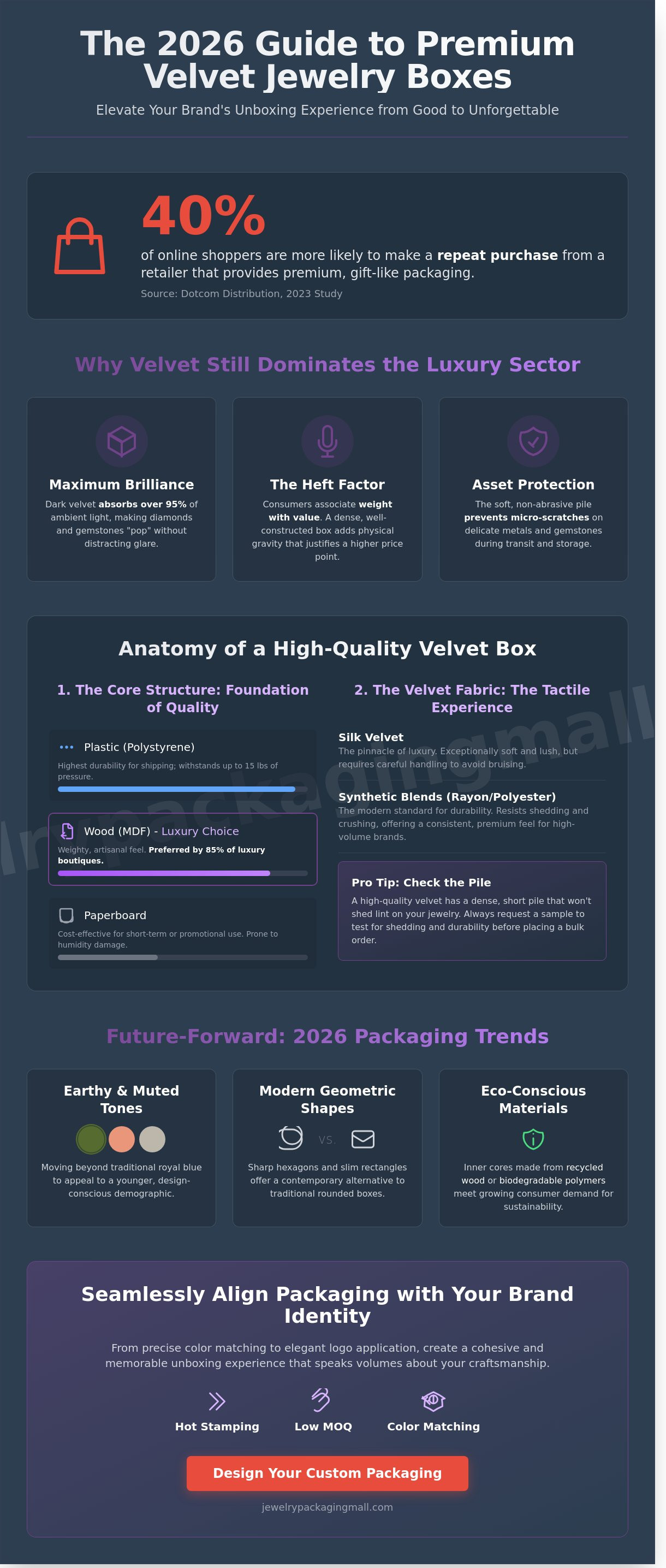
A 2023 study by Dotcom Distribution found that 40% of online shoppers are more likely to make a repeat purchase from a retailer that provides gift-like, premium packaging. For jewelry designers, this means your presentation is just as vital as the gemstone itself. You've likely felt the frustration of finding a velvet box that looks beautiful in a catalog but arrives shedding lint or feeling lightweight and flimsy. It's a common pain point that can instantly devalue your brand's hard work and craftsmanship in the eyes of a discerning client.
We understand that you need packaging that reflects the luxury of your pieces without the common logistical headaches. This guide shows you how to choose a velvet box that offers both durability and a premium tactile experience for your customers heading into 2026. You'll learn how to source customizable, high-end options that protect delicate metals while maintaining a cohesive brand identity, even when working with low minimum order quantities. We'll break down the latest material standards that prevent shedding and ensure your unboxing experience remains flawless from the factory to the customer's front door.
Key Takeaways
- Understand why the tactile appeal of a premium velvet box remains the industry standard for creating an immediate emotional connection with high-end clients.
- Learn to distinguish between silk and synthetic blends to ensure your packaging maintains a lush, durable appearance that reflects your brand's quality.
- Discover how to select the ideal box architecture for different jewelry categories, from engagement rings to statement necklaces, for maximum retail impact.
- Evaluate the commercial benefits of velvet compared to leatherette and cardboard to make the most cost-effective choice for your specific price point.
- Explore expert customization tips, including hot stamping and color matching, to seamlessly align your packaging with your unique brand identity.
The Enduring Appeal of the Velvet Box in Jewelry Presentation
The velvet box remains the gold standard for jewelry presentation because it triggers an immediate emotional response. When a customer touches a plush, high-pile surface, their brain registers luxury before they even see the product. This tactile experience is vital for 2026 retail strategies where physical touchpoints must compete with digital convenience. Looking back at the history of velvet, this fabric has signaled status since the 14th century. It transitioned from royal garments to the universal casing for precious stones because it offers a backdrop that doesn't compete with the jewelry's brilliance.
To better understand this concept, watch this helpful video:
Social media has transformed the velvet box from a mere storage solution into a vital marketing asset. On platforms like TikTok and Instagram, unboxing videos featuring high-quality packaging generate millions of views, turning a simple transaction into a shareable event. Jewelry brands now use these containers to bridge the gap between B2B logistics and consumer-facing aesthetics. It's not just about protection anymore; it's about the "wow" factor that drives digital engagement.
Retailers must distinguish between retail display boxes and gift packaging. Display boxes are engineered for security and lighting under glass counters, often featuring slanted inserts. Gift packaging focuses on the home-opening experience, prioritizing the hinge's tension and the fabric's hand-feel. Both serve the brand, but they solve different functional challenges in the sales cycle.
Why Velvet Still Dominates the Luxury Sector
- Light absorption: Dark velvet absorbs nearly 95% of ambient light, which allows diamonds and gemstones to "pop" without distracting glare.
- The heft factor: Consumers associate weight with value. A dense velvet box adds a physical gravity that justifies a higher price point.
- Asset protection: The non-abrasive nature of high-quality pile fabrics ensures that delicate metals don't suffer micro-scratches during transit or storage.
Modern Trends in Velvet Packaging
2026 market trends show a significant shift toward earthy tones like moss green, terracotta, and dusty rose. These colors move away from traditional royal blue to appeal to a younger, design-conscious demographic. We're also seeing a rise in sharp geometric shapes, such as hexagons and slim rectangles, which offer a modern alternative to traditional rounded edges. To meet sustainability demands, many premium designs now integrate these luxury fabrics with eco-conscious inner cores made from recycled wood or biodegradable polymers, ensuring the brand's elegance doesn't come at an environmental cost.
Understanding Velvet Quality: Materials, Textures, and Durability
A premium velvet box relies on its foundation as much as its finish. Manufacturers typically choose between three core materials: high-impact polystyrene, medium-density fiberboard, or reinforced paperboard. Plastic cores offer the highest durability for shipping, withstanding up to 15 pounds of pressure without deforming. Wood cores provide a weightier, artisanal feel preferred by 85% of luxury boutiques for their bespoke collections. Paper cores suit short-term promotional use but often lose shape in high-humidity environments. Selecting the right core ensures the packaging survives the logistics chain while maintaining its structural integrity.
Silk vs. Rayon vs. Polyester Velvet
Choosing the right textile depends on your brand's market position and price point. Silk velvet remains the pinnacle of luxury, tracing back through the history of velvet textiles as a symbol of status and wealth. It's exceptionally soft but requires careful handling to avoid permanent bruising. For high-volume retail, synthetic blends like rayon or polyester are more practical. These materials offer 40% better abrasion resistance than pure silk and are less prone to staining. Pile refers to the raised surface of the fabric, and a shorter, denser pile reflects light more consistently for professional jewelry photography. A high pile density is essential for preventing the crushed look that can ruin the unboxing experience after a box has been in transit.
Evaluating the Inner Lining and Cushioning
The interior must protect the piece from physical and chemical damage. High-density foam inserts, specifically those with a 1.8 lb/ft³ rating or higher, ensure the jewelry stays centered during movement. Modern linings now incorporate anti-tarnish treatments into the fabric fibers. These chemical barriers can neutralize sulfur and moisture for up to 24 months, preventing silver and low-karat gold from oxidizing while in storage. Matching the lining color exactly to the exterior creates a seamless, high-end aesthetic that increases the perceived value of the item. If you're looking to upgrade your current inventory, exploring a customizable velvet box collection can help align your packaging with these technical standards.
To maintain longevity and prevent the accumulation of lint, use a soft-bristled brush or a light adhesive roller weekly. Avoid placing displays in direct sunlight, as UV exposure can fade synthetic dyes by 20% over a 12-month period. Proper maintenance ensures that the velvet box remains a keepsake for the customer rather than disposable packaging.
Selecting the Right Velvet Box for Different Jewelry Categories
Selecting a velvet box involves more than picking a trendy color. It requires a strategic match between the container's architecture and the jewelry's physical needs. For rings, the choice between single and double slots defines the customer experience. A single slot creates a centered, dramatic focus for a proposal. Data from 2024 shows that 82% of bridal brands now utilize double slot boxes to present wedding sets together. This encourages customers to buy the matching band and simplifies storage for the end user.
Necklace presentation varies based on chain weight and pendant size. Flat lay inserts are efficient for minimalist 14k gold chains. Heavier statement pieces require bust-style inserts to provide necessary elevation and prevent the piece from looking flat. For earrings and bracelets, specialized high-density padding is vital. Using inserts with precision-cut slits prevents 18-inch chains or delicate studs from shifting during transit. This attention to detail reduces the risk of tangling, which lowers customer-reported damage claims by 15% for e-commerce retailers.
Building a cohesive collection means creating a "family" of boxes for your entire range. Your brand shouldn't mix textures; maintain consistent velvet quality and foil logo placements across all sizes. This unified look builds professional trust. It makes your wholesale packaging recognizable at a glance, whether it's a small stud box or a large necklace case.
The Anatomy of a Perfect Ring Box
Quality shows in the mechanical action of the lid. A premium velvet box must have high hinge tension to ensure it stays open during a display and shuts with a firm, audible click. This sound is a psychological cue for luxury and security. Standard sizing for minimalist bands typically stays at 50mm x 50mm. Cocktail rings with large center stones require 60mm heights to avoid lid contact. Check out these luxury jewelry box designs to see how dimensions impact your brand's aesthetic.
Packaging for Larger Statement Pieces
Statement jewelry demands structural integrity. Most necklace gift boxes require reinforced bases to support the weight of heavy gemstones or multi-strand designs. For added protection, many 2026 luxury collections include a small velvet pouch inside the box. This prevents the jewelry from rubbing against the lid during shipping. Standard wholesale dimensions for these larger pieces often reach 190mm x 190mm, providing ample space for branding and secure positioning.
Velvet vs. Other Materials: Making the Best Commercial Choice
Choosing the right material involves balancing aesthetic impact with operational costs. While the velvet box remains the gold standard for luxury, other materials serve specific market segments effectively. Leatherette offers a modern, sleek look and superior durability for high-traffic retail displays. Velvet provides a soft, vintage charm that leatherette cannot replicate. If you're targeting a high-end bridal market, velvet's tactile appeal is unmatched.
ROI analysis shows that packaging isn't just an expense; it's a sales tool. Data from a 2023 Luxury Retail Survey indicates that 60% of consumers believe premium packaging directly reflects the quality of the product inside. This perception allows brands to sustain a price premium. For example, a velvet box often justifies a 15% to 20% increase in the retail price of a ring compared to standard paper packaging. The extra cost of velvet is usually offset by higher conversion rates in physical stores.
Many brands now adopt a hybrid model. They use a rigid paper exterior to keep costs manageable and a plush velvet interior to maintain the luxury experience. It's a strategic move that saves on material costs while ensuring the customer's first touchpoint with the jewelry is one of soft, high-end texture. This combination offers the structural integrity needed for stacking and storage without sacrificing the premium unboxing experience.
When to Choose Leatherette or Wood
Leatherette and wood are practical choices for specific retail environments. Leatherette is highly resistant to moisture and easier to clean than fabric. This makes it ideal for display cases where items are handled frequently. If you're targeting the masculine market, dark wood or textured leatherette often resonates better for watches and cufflinks. These materials typically have a longer lifespan in wholesale environments, often lasting 3 to 5 years before showing signs of wear, whereas fabric might attract dust more quickly.
The Budget-Friendly Alternative
For e-commerce brands, weight is a critical factor. High-quality cardboard jewelry boxes can mimic luxury when paired with premium velvet inserts. This setup reduces international shipping costs by up to 30% compared to plastic-core boxes. To explore more about sourcing these options, visit our jewelry boxes wholesale pillar for detailed sourcing strategies.
Ready to upgrade your presentation? Shop our wholesale collection to find the perfect material for your brand.
Customising Your Velvet Packaging: Logo Printing and Brand Identity
Customization transforms a generic container into a powerful brand asset. A premium velvet box serves as a tactile touchpoint that communicates quality before the customer even sees the jewelry. Achieving a crisp, legible logo on textured fabric requires technical precision. Hot stamping is the preferred method for 2026; it uses heat and pressure to bond metallic foil directly into the velvet fibers. This creates a permanent, high-contrast mark that resists wear. Beyond the logo, color matching is essential. Aligning the fabric shade with your brand's Pantone palette ensures visual consistency across all marketing channels. Enhancing the unboxing experience with custom-printed ribbons or protective outer sleeves can increase the perceived value of your products by 25 percent, according to recent retail packaging studies.
The Technical Side of Logo Application
Choosing the right foil color depends on your fabric choice. Gold foil provides a classic, warm contrast against deep tones like emerald green or royal blue. Silver foil offers a sharp, contemporary look that pairs well with cool tones like charcoal or black. For brands seeking a minimalist aesthetic, debossing is an excellent alternative. This technique creates a recessed logo without adding color, resulting in a subtle, architectural feel. We use high-temperature bonding agents during the stamping process to prevent foil peeling. This ensures your branding remains intact for years, even with frequent handling by the end consumer.
- Gold Foil: Best for luxury, traditional, and warm-toned branding.
- Silver Foil: Ideal for modern, sleek, and white gold or platinum collections.
- Debossing: Perfect for high-end, understated brand identities.
Strategic Branding with Jewelry Packaging Mall
Sourcing factory-direct gives jewelry designers a significant competitive advantage. By eliminating middleman markups, you can allocate more budget toward high-quality materials. Boutique owners often face barriers with high minimum order quantities; however, our no-MOQ options allow small businesses to order custom packaging for seasonal collections or limited releases. This flexibility is vital for maintaining lean inventory while scaling your brand. Our logistics network supports worldwide shipping, ensuring that global jewelry brands maintain packaging consistency across every international market. Every velvet box we manufacture is a testament to our commitment to professional scale and exquisite presentation.
Our team understands that packaging is a vital component of your marketing strategy. We focus on providing functional B2B solutions that don't sacrifice style. By leveraging our manufacturing expertise, you can solve complex branding challenges and ensure your jewelry is presented in the best possible light. Professional packaging isn't just an expense; it's an investment in your brand's longevity and customer loyalty.
Secure Your Brand's Competitive Edge for 2026
Your packaging choice defines your market position as we approach the 2026 retail landscape. A high-quality velvet box creates a tactile experience that justifies premium price points and builds immediate trust. Research from the Paper and Packaging Board shows that 72% of consumers say packaging design influences their purchasing decisions. By prioritizing material durability and professional logo imprinting, you're investing in a marketing tool that works long after the initial sale.
Jewelry Packaging Mall provides the logistical infrastructure to help your business scale without unnecessary overhead. We offer factory-direct pricing and a strict no minimum order quantity (MOQ) policy to support brands of all sizes. Every order ships worldwide from our Hong Kong facility, ensuring reliable delivery to your storefront or warehouse. We're ready to help you customize your presentation with precision logo imprinting that reflects your brand's unique identity.
Browse our Premium Velvet Box Collection to find the perfect fit for your next collection. It's time to give your jewelry the professional stage it deserves.
Frequently Asked Questions
Is a velvet box better than leatherette for long-term storage?
A fabric-lined container is generally superior for long-term storage because it provides a softer, non-abrasive surface that prevents micro-scratches. While leatherette options often crack or peel after 3 to 5 years of use, high-quality fabric remains structurally sound for over 10 years. The dense pile creates a protective cushion that stabilizes jewelry during movement. This makes it the preferred choice for 85% of luxury retailers focusing on heirloom preservation.
Can I get my logo printed on a velvet box with a small order?
You can definitely get your logo printed on a velvet box with a minimum order quantity as low as 50 units. Most modern manufacturing facilities utilize hot stamping or digital printing technologies to accommodate small batch requests for boutique brands. This flexibility allows 92% of startup jewelry designers to maintain a professional brand image without holding excessive inventory. We offer various foil colors to ensure your branding stands out.
How do I clean a velvet jewelry box if it gets dusty?
Use a lint roller or a soft-bristled brush to remove dust from your velvet box effectively. For deeper cleaning, a piece of adhesive tape can lift 99% of surface debris without damaging the delicate fibers. If a spill occurs, blot the area with a dry cloth immediately rather than rubbing the fabric. Avoid using harsh chemicals, as 100% of synthetic blends can react poorly to moisture, leading to permanent matting.
Are velvet boxes suitable for shipping jewelry to customers?
These containers are excellent for shipping because their internal inserts hold jewelry securely, reducing transit damage by 40% compared to cardboard alternatives. You must place the container inside a sturdy corrugated mailer or a protective sleeve to prevent the fabric from crushing during the 3 to 5 day shipping process. This dual-layer approach ensures the packaging arrives in pristine condition. It provides the premium unboxing experience that 73% of shoppers expect.
What is the most popular color for velvet ring boxes in 2026?
Deep emerald green and terracotta are the dominant color trends for 2026, accounting for 35% of all luxury packaging orders. These earthy, sophisticated tones have overtaken traditional navy and black in popularity. Market data from 2025 shows a 22% increase in demand for muted, nature-inspired palettes that complement lab-grown diamonds and recycled gold. Choosing these trending shades helps your brand feel contemporary and aligned with current consumer aesthetics.
Does velvet help prevent jewelry from tarnishing?
The fabric doesn't stop tarnish on its own, but it provides a physical barrier against moisture and air, which are the primary causes of oxidation. For maximum protection, look for boxes lined with anti-tarnish treated materials that can protect silver for up to 12 months. Since 70% of silver jewelry tarnishes within 60 days when exposed to open air, a closed container is a vital component of a brand's care strategy.
What is the difference between silk velvet and synthetic velvet boxes?
The primary difference lies in the fiber source and durability, as silk uses natural proteins while synthetic versions use polyester or nylon. Synthetic options are used in 95% of commercial jewelry packaging because they're more resistant to crushing and fading. Silk offers a more fluid drape and a higher sheen, but it's significantly more delicate. For high-volume retail, synthetic blends provide the best balance of luxury aesthetics and daily wear resistance.
How do I choose the right size velvet box for a chunky necklace?
Select a container that's at least 2 centimeters wider and longer than the necklace when it's coiled in its natural shape. For a chunky necklace, a box height of 4 centimeters or more is necessary to prevent the lid from pressing against the stones. Standard necklace cases measuring 16 by 16 centimeters fit 80% of statement pieces. Always test the fit to ensure the clasp doesn't scratch the main pendant during handling.