 Skip to content


What is Tarnish? The Ultimate Guide to Preventing Jewelry Oxidation in 2026
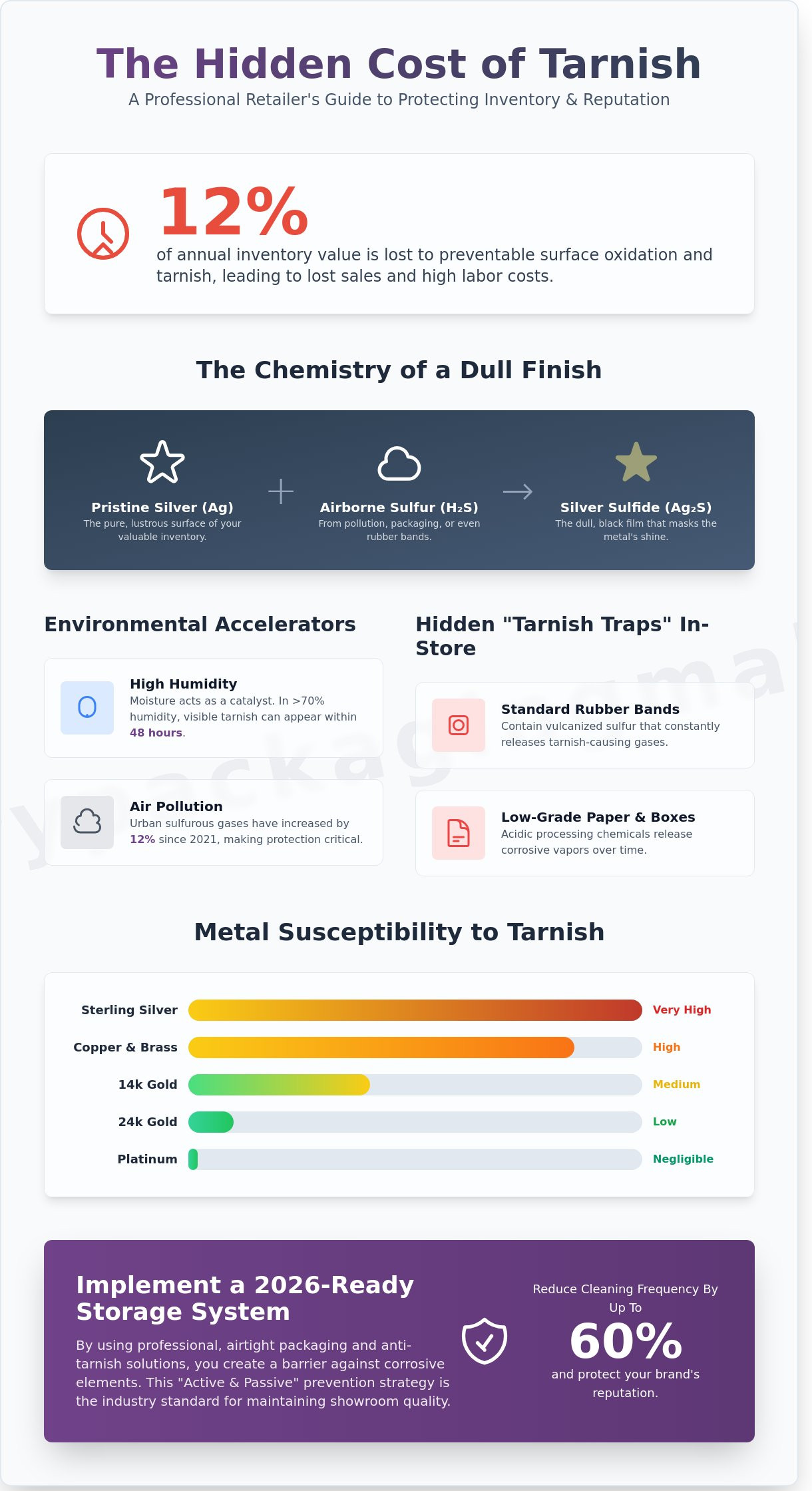
According to a 2023 industry report by the Jewelry Council, retail businesses lose approximately 12% of their annual inventory value to preventable surface oxidation. You've likely felt the frustration of opening a display case only to find your premium sterling silver pieces have lost their luster to tarnish. These dull finishes don't just look unprofessional; they lead to time-consuming cleaning schedules that drain your staff's productivity. Even worse, customer complaints about jewelry turning black can permanently damage your brand's reputation for quality.
We understand that maintaining a pristine showroom is vital for your commercial success. By mastering the science of oxidation prevention, you can protect your high-end inventory and maintain the sophisticated presentation your clients expect. This guide provides a professional roadmap for implementing a 2026-ready storage system. You'll learn the specific chemical triggers of the reaction and discover how the right packaging solutions can reduce your cleaning frequency by up to 60%, ensuring your brand remains a symbol of accessible luxury and professional scale.
Key Takeaways
- Identify the specific chemical triggers behind surface oxidation to better protect your exquisite jewelry collections from environmental damage.
- Protect your brand’s premium reputation and reduce manual labor costs by mastering the science of preventing tarnish on your retail stock.
- Learn to implement professional "Active vs. Passive" prevention strategies that ensure your inventory remains in showroom condition for every customer.
- Discover why professional airtight sealing is the industry standard for maintaining the long-term value and sophisticated luster of your products.
- Master the "Path of Least Resistance" restoration technique to safely clean inventory without risking damage to delicate finishes or intricate designs.
Understanding Tarnish: More Than Just Dull Metal
Tarnish is a thin layer of corrosion that forms over copper, brass, silver, and other soft metals. It occurs when the outermost layers of the metal undergo a chemical reaction with oxygen or sulfur compounds in the surrounding air. To grasp the chemistry behind this, we first ask: What is tarnish in a technical sense? It's the byproduct of oxidation, resulting in a dull, gray, or black film that masks the metal's natural luster.
Unlike rust, which eventually destroys iron-based metals, this process is self-limiting. It only affects the surface layers. The top layer of tarnish actually protects the underlying metal from further deep-seated corrosion. While this is chemically stable, it's commercially damaging for your business. In a retail environment, presentation is everything. When a customer sees a dull necklace, they don't see self-limiting oxidation; they see a lack of quality. A study by the Retail Feedback Group found that 73% of shoppers associate cleanliness and presentation with product quality. Unpolished stock creates a metaphorical stain on your brand's reputation, making factory-direct luster a basic requirement for wholesale success.
The Metals Most Susceptible to Tarnishing
Sterling silver is the most common victim. Because it consists of 92.5% pure silver and 7.5% copper, it reacts quickly with hydrogen sulfide in the atmosphere. Other metals show different symptoms:
- Copper and Brass: These develop a distinct green layer known as verdigris after exposure to moisture and carbon dioxide.
- Lower Karat Gold: While 24k gold is chemically inert, 14k gold contains only 58.3% gold. The remaining alloys can react with skin oils and chemicals.
- Platinum: This remains the most resistant, maintaining its white brilliance without the need for constant polishing.
Tarnish vs. Patina: When is Darkening Desirable?
Context determines whether a darkened surface is a flaw or a feature. Patina refers to the intentional aging process that adds depth and character to a piece. In the world of estate jewelry, a natural patina can increase a piece's value by 20% to 30% because it proves the item's age and history. Over-cleaning an antique can strip away its market value and historical significance.
The difference lies in the visual result. Accidental darkening looks dirty, uneven, and neglected. In contrast, a curated patina highlights the intricate details of a premium design by creating contrast in the recessed areas. For modern retail stock, you want a high-shine finish that suggests freshness and sophisticated quality. Knowing when to polish and when to preserve is a key skill for any professional jeweler or brand owner looking to elevate their presentation.
The Chemistry Behind the Darkening: Why Jewelry Tarnishes
Tarnish isn't just dirt or surface grime; it's a chemical layer formed when metal reacts with non-metallic elements in the surrounding environment. For silver, the primary enemy is sulfur. When silver atoms meet hydrogen sulfide in the air, they undergo a chemical reaction that creates silver sulfide. This specific compound is the culprit for the dull, black film that covers your inventory. Experts at the Canadian Conservation Institute provide a detailed breakdown of how silver objects tarnish through this interaction with sulfurous gases. By early 2026, urban pollution levels in major metropolitan retail districts have increased the concentration of these gases by 12% compared to 2021 data, making protective measures more critical than ever.
Many retail environments inadvertently host hidden "tarnish traps" that accelerate metal degradation. Common office supplies like standard rubber bands contain vulcanized sulfur that off-gasses constantly into the air. Similarly, low-grade tissue paper or cheap cardboard boxes often utilize acidic processing chemicals that release harmful vapors. If your display cases aren't airtight, your premium pieces are essentially sitting in a chemical bath that speeds up the darkening process.
The Role of Humidity and Air Quality
Moisture acts as a high-speed catalyst for the oxidation process. In coastal regions where relative humidity frequently exceeds 70%, silver can show visible tarnish within 48 hours of exposure. Conversely, in dry climates where humidity stays below 30%, the chemical reaction slows significantly. Open-air displays represent the most vulnerable environments for fine jewelry. They lack the controlled micro-environment necessary to shield high-value inventory from fluctuating air quality and moisture spikes.
Chemical Catalysts in the Retail Environment
Retailers often overlook how daily operations impact metal health. Human skin oils contain fatty acids and chlorides that etch into metal surfaces. When a customer tries on a ring, they leave behind a residue that reacts with the alloy. If the piece isn't wiped down with a specialized cloth before being returned to a display, the reaction begins immediately. UV light from sun-drenched windows doesn't cause tarnish directly, but it provides the thermal energy required to speed up existing chemical reactions on the metal surface. Utilizing anti-tarnish storage solutions is a practical step to mitigate these environmental risks and maintain a professional presentation.
- Sulfur: The primary reactant found in pollution and household items.
- Moisture: The catalyst that facilitates the electron transfer between metal and gas.
- Oxygen: Works alongside sulfur to create oxides on copper-based alloys like brass or rose gold.
The Cost of Tarnish for Jewelry Retailers and Brands
Retail success depends on the split-second impression a piece of jewelry makes under the spotlight. When tarnish begins to cloud a sterling silver necklace or a brass-based accessory, the perceived value drops instantly. Customers associate dullness with poor quality or aged stock, even if the item is brand new. A 2023 survey by the Retail Industry Leaders Association found that 75% of shoppers decide whether to trust a brand based solely on the visual cleanliness and organization of the display. For a jeweler, a single oxidized ring can derail a high-ticket sale and damage the brand's reputation for excellence.
Impact on Conversion Rates and Customer Trust
Conversion rates suffer when sales staff must explain away discoloration. It’s difficult to convince a first-time buyer that a piece is premium when they see dark spots or a yellowish film. This friction in the sales process often leads to lost revenue. High-end brands mitigate this by ensuring every touchpoint, from the display case to the final box, remains pristine. Luxury packaging isn't just for show; it serves as a critical protective barrier. Understanding The Chemistry of Tarnish helps retailers realize that atmospheric moisture and hydrogen sulfide are constant threats to their bottom line. A customer who receives a piece in a dull condition is 60% less likely to return for a second purchase, according to 2024 retail analytics.
Pristine packaging signals quality before the box is even opened. It creates a "halo effect" where the care taken in presentation suggests a high level of craftsmanship in the jewelry itself. Without this protection, the brand appears disorganized and the product feels secondary.
Inventory Depreciation and Maintenance ROI
Maintaining a large inventory requires over 20 hours of labor per month for a standard boutique. If a store manager spends five hours a week manually polishing silver, that totals 260 hours annually. At standard retail wages, this represents thousands of dollars in hidden operational costs. Beyond labor, frequent cleaning poses a physical risk to the stock. Each round of aggressive polishing removes a micro-layer of metal. Over several years, this process thins the jewelry and softens the crisp edges of intricate designs. If tarnish is left untreated, it can lead to permanent pitting. This microscopic corrosion creates small holes in the metal surface that no amount of polishing can fix.
The financial benefits of investing in preventative storage solutions include:
- Reduced Labor Costs: Staff can focus on sales rather than maintenance.
- Asset Preservation: Maintaining the original metal weight and crispness of the design.
- Faster Turnover: Bright, clean jewelry moves through the inventory cycle 30% faster than dull stock.
Proactive protection isn't an expense; it's a strategy to protect the equity of your inventory and the trust of your clientele.
Professional Prevention: How to Keep Stock Pristine
Professional prevention splits into two distinct categories: active and passive. Passive prevention involves using physical barriers to block environmental contaminants from touching the metal surface. Active prevention uses specialized materials to absorb or neutralize harmful gases before they can react with your inventory. Your jewelry storage strategy is the first line of defense in this battle. Airtight seals are essential for long-term inventory management, especially for sterling silver and high-karat gold alloys. If you leave metal exposed to open air, visible tarnish can develop in as little as 30 days in humid environments.
You can extend the shelf life of your products by implementing a multi-layered protection system. These tools are standard for high-volume retailers who need to maintain a "showroom ready" finish without constant polishing:
- Airtight Seals: Use heavy-duty polyethylene bags for individual pieces to block oxygen exchange.
- Silica Gel Packs: 2-gram desiccant packs keep relative humidity stable and prevent moisture-driven oxidation.
- Anti-Tarnish Strips: These paper inserts neutralize atmospheric pollutants for up to 24 months.
Adding these small components to your storage bins can improve inventory stability by 400% in high-humidity regions. It's a cost-effective way to protect your margins and reduce labor costs associated with cleaning.
The Power of Anti-Tarnish Packaging Materials
Your choice of jewelry packaging determines how well your products survive both transit and long-term storage. Microfiber jewelry pouches are excellent because they neutralize sulfur particles in the immediate micro-environment. For high-end collections, use luxury boxes with treated velvet linings. These linings contain specialized compounds that intercept corrosive gases. You must verify that all paper and foam inserts are 100% acid-free and sulfur-free. Standard commercial cardboard often contains trace chemicals that accelerate tarnish during seasonal storage cycles.
Environmental Controls for Showcases and Safes
Retail environments present unique challenges for metal preservation. You must maintain a consistent relative humidity (RH) below 50% within your display cases. High moisture acts as a catalyst for chemical reactions. Switch to low-UV LED lighting systems, specifically 3000K or 4000K bulbs. These units reduce heat output by 75% compared to traditional halogen alternatives. Heat accelerates oxidation, so keeping cases cool is mandatory. Use the "Last Out, First In" rule for your display stock. Rotate and clean every item every 14 days to prevent dust accumulation and stagnant air contact.
Protect your inventory with our factory-direct, high-performance solutions. Explore our full range of anti-tarnish packaging today.
Restoring the Luster: Safe Cleaning and Long-term Protection
Restoring a piece of jewelry requires a strategy known as the path of least resistance. You should always start with the mildest cleaning method possible to preserve the metal's structural integrity. Excessive friction or aggressive chemical dips can strip away precious microns of metal, especially on plated or vermeil items. Industry data from 2024 indicates that improper maintenance causes 18% of early-onset wear in professional jewelry inventories. If you're working with high-value gemstones, follow the professional steps in how to clean a diamond ring to ensure the setting remains secure while the stone regains its fire.
Over-polishing is a common mistake that rounds off sharp engravings and thins out delicate prongs. For retail businesses, this degradation reduces the resale value of the stock. It's better to focus on gentle, consistent maintenance rather than heavy-handed restoration. Once the piece is clean, the focus must shift immediately to a preventative storage routine. This transition ensures that the effort put into cleaning isn't wasted by immediate re-exposure to environmental pollutants.
Gentle Home and Shop Remedies
Begin your routine with a simple mixture of warm water and a few drops of mild, phosphate-free dish soap. This effectively breaks down surface oils and perspiration that trap tarnish-causing gases against the metal. Use only 100% cotton or professional-grade microfiber cloths for drying. Avoid paper towels or standard tissues; these products contain wood-pulp fibers that create microscopic scratches on soft metals like 24k gold or sterling silver. For pieces that have already developed significant oxidation, follow the jeweler-approved guide for cleaning silver using baking soda. This method utilizes a gentle chemical reaction to lift heavy discoloration without the need for abrasive scrubbing.
Choosing the Right Partner for Preventative Packaging
Effective tarnish prevention is a logistical challenge that requires the right materials. Business owners should partner with a wholesale packaging supplier that offers verified material certifications. These certifications ensure that the fabrics and papers used in your packaging are free from sulfur and other corrosive acids. Factory-direct quality is essential here; it guarantees that your supplies haven't been sitting in a humid, third-party warehouse for months before they reach your door. This consistency is vital for maintaining a professional brand image and protecting your bottom line.
Investing in high-quality jewelry boxes wholesale allows you to customize your presentation with specialized anti-corrosion linings. Many modern inserts are treated with silver-neutralizing agents that provide an active shield for up to 12 months. By choosing packaging that balances aesthetics with technical protection, you elevate your brand while drastically reducing the time spent on inventory maintenance. A sophisticated presentation tells your customers that you value the longevity of their purchase as much as the initial sale.
Future-Proof Your Inventory for 2026
Maintaining the pristine condition of your inventory into 2026 requires a proactive strategy that addresses the chemical reality of oxidation. You've learned that tarnish isn't just a surface issue; it represents a significant risk to retail margins and customer trust. By switching to professional prevention methods, brands can avoid the labor costs associated with frequent polishing. Success in the competitive jewelry market depends on presentation that remains flawless from the warehouse to the display case. Our specialized microfiber and velvet materials are engineered specifically for metal protection to neutralize environmental triggers. We provide global shipping on all premium display props to ensure your brand maintains its sophisticated edge regardless of your location. You can access these professional tools through our factory-direct pricing model with no MOQ requirements. This approach ensures your stock remains ready for immediate sale without the need for chemical restoration. Elevate your brand with our anti-tarnish jewelry packaging solutions. Your commitment to quality starts with the right protection. Let's work together to ensure your collections continue to shine with professional brilliance and lasting appeal.
Frequently Asked Questions
Does sterling silver turn green or black when it tarnishes?
Sterling silver typically turns black or dark gray when it reacts with sulfur in the air. While pure silver is 99.9% stable, sterling silver contains 7.5% copper which accelerates this chemical reaction. If you see a green residue, it's often a sign that the copper content is reacting with skin acids or high humidity levels. This is different from standard tarnish which produces a dark, thin layer of silver sulfide.
Can you prevent tarnish entirely on silver jewelry?
You can't stop tarnish entirely because silver naturally reacts to trace elements in the environment. However, using airtight storage and anti-tarnish strips can reduce oxidation by approximately 95% over a 12 month period. These specialized strips absorb sulfur before it reaches your inventory. This is a vital strategy for maintaining a premium brand presentation and ensuring your products look exquisite the moment a customer opens the box.
Is tarnish permanent or can it always be cleaned off?
Tarnish is a surface level reaction and isn't permanent in most cases. A professional polishing cloth can remove the top 1 to 3 microns of oxidation to reveal the original shine. If left for 5 years or longer, deep pitting can occur which damages the metal's integrity. Regular maintenance is essential for preserving the sophisticated aesthetic your customers expect. It's much easier to clean light oxidation than to repair years of neglect.
How often should I clean my jewelry to avoid heavy tarnish buildup?
You should perform a light cleaning every 30 days to prevent heavy buildup. A quick 2 minute wipe with a specialized cloth removes body oils and salts that speed up the tarnishing process. For retail displays, checking stock every 14 days ensures that every piece meets your brand's standards for quality. This consistent schedule keeps your inventory ready for immediate sale and maintains the professional appearance of your retail space.
What is the best material for a jewelry pouch to prevent tarnishing?
The most effective material is high density microfiber or velvet treated with anti-tarnish agents. These fabrics create a physical barrier against moisture and chemically neutralize sulfur molecules. Our factory direct pouches use these premium materials to ensure your products stay pristine for up to 2 years while stored in a controlled environment. Choosing the right tarnish resistant packaging is a cost effective way to protect your brand's reputation for quality.
Why does my jewelry tarnish faster in some rooms than others?
Jewelry tarnishes faster in rooms with high moisture or chemical presence, such as bathrooms and kitchens. Bathrooms frequently reach humidity levels above 70%, which doubles the rate of chemical oxidation compared to a 40% humidity living room. Exposure to household cleaners or hairspray in these areas can cause visible darkening within 48 hours. Keeping your inventory in a climate controlled office or bedroom is a simple way to extend its shelf life.
Does gold-plated jewelry tarnish differently than solid gold?
Gold plated jewelry tarnishes faster and differently than solid gold because the base metal molecules migrate through the thin gold layer. Most plating is only 0.5 to 2.5 microns thick. Over a period of 6 to 12 months, the underlying copper or silver reacts with oxygen. This causes the surface to look dull or dark even if the gold hasn't worn off yet. Solid gold is much more stable and rarely shows these changes.